
Shih Tzu Tear Stains: Causes and How to Treat Them
At Champaign Shih Tzu, tear stains are one of the questions we hear about most from families who’ve brought home one of our puppies. If you’ve noticed reddish-brown streaks forming under your Shih Tzu’s eyes, you’re not imagining it, and you’re definitely not alone. Shih Tzu tear stains are one of the most common cosmetic issues in the breed, and understanding what’s actually causing them makes a real difference in how well you can manage them. Here’s everything we tell our own families about causes, safe home care, and when staining is worth a vet visit instead.
What Are Shih Tzu Tear Stains?
Shih Tzu tear stains are the reddish-brown or rust-colored discoloration that develops in the fur beneath a dog’s eyes when tears sit on the coat instead of draining normally. The color comes from porphyrins, iron-containing compounds naturally present in tears, which darken when exposed to air and sunlight. Tear stains show up on Shih Tzus of every coat color, but they’re most visible on lighter or white fur, since the contrast makes even mild staining easy to spot.
What Causes Shih Tzu Tear Stains?
Several factors contribute to tear staining in this breed, often in combination rather than just one single cause.

Facial Structure
Shih Tzus have shallow eye sockets and a short muzzle, which is part of what gives the breed its signature look, but it also means tears have a shorter, less efficient path to drain naturally, so more moisture ends up on the face instead.
Facial Hair Irritation
Long hair around the eyes can rub against the eye itself, triggering extra tearing as a natural response to that irritation. Keeping hair trimmed and away from the eyes is one of the simplest ways to reduce this particular cause.
Diet and Food Sensitivities
Lower-quality food, or a food your individual dog doesn’t tolerate well, can increase tear production in some dogs. Switching to a high-quality diet sometimes noticeably improves staining within a few weeks.
Water Quality
Tap water with a high mineral content can contribute to staining for some dogs, which is why some owners notice improvement after switching to filtered water.
Teething
Shih Tzu puppies often experience a temporary increase in tearing while their adult teeth come in, since the tooth roots sit close to the tear duct area.
Underlying Irritation or Infection
Allergies, mild eye irritation, or a minor infection can all increase tear production. This is the one cause worth watching closely, since it’s the difference between a cosmetic issue and something that needs veterinary attention.
Are Some Shih Tzus More Prone to Tear Stains Than Others?
Yes, individual variation is completely normal, even within the same litter. Two puppies raised in identical conditions, eating the same food, can still tear at noticeably different rates, since eye shape, tear duct size, and general sensitivity vary from dog to dog just like they do in people. A puppy who tears more than a littermate isn’t necessarily less healthy; it’s often simply a matter of individual anatomy. That said, if one dog’s tearing is dramatically more than a littermate’s, or increases suddenly rather than staying consistent, it’s worth mentioning to your vet just to rule out anything else going on.
Coat texture can play a small role too. Dogs with finer, softer facial hair sometimes show staining a bit more readily than dogs with coarser hair, since finer hair tends to hold moisture against the skin longer.
Is It Just Cosmetic, or a Sign of a Health Issue?
In most cases, Shih Tzu tear stains are purely cosmetic, caused by ordinary tear overflow rather than anything concerning. That said, staining alone can sometimes overlap with an underlying issue, so it’s worth knowing the difference.
Cosmetic staining typically looks like consistent, mild discoloration without any other symptoms. It becomes worth a vet visit if you notice redness around the eye, swelling, squinting, pawing at the face, a sudden increase in tearing, or thick, colored discharge rather than clear tears. None of that means panic is necessary, but those particular signs are worth having a vet take a look at rather than treating as a grooming issue alone.
How to Remove Shih Tzu Tear Stains Naturally
The most effective approach to Shih Tzu tear stains at home combines gentle daily cleaning with a few habit changes, rather than relying on any single product to do all the work.
Clean the Area Daily
A soft, damp cloth with warm water, or a vet-formulated tear stain solution, works well for gently wiping the stained area. Always wipe away from the eye, never toward it.
Keep the Area Completely Dry Afterward
Moisture left on the fur is exactly what allows staining to set in and worsen, so a final gentle pat-dry after cleaning matters more than people expect.
Trim Hair Away From the Eyes Regularly
Shorter hair around the eyes means less irritation, less extra tearing, and an easier surface to keep clean day to day.
Look at Diet and Water
If staining seems to worsen or improve alongside diet changes, that’s useful information. A high-quality food and filtered water are simple, low-risk changes worth trying.
Avoid Anything Not Designed for Use Near the Eyes
Skip home remedies involving harsh chemicals, strong essential oils, or anything not specifically formulated for sensitive facial and eye-area skin. When in doubt, a vet-formulated tear stain product is the safer choice over an improvised home mixture.
Common Mistakes That Make Tear Stains Worse
A few well-intentioned habits can actually work against you when it comes to managing Shih Tzu tear stains.
Using Human Products Near the Eyes
Baby wipes, human shampoo, or anything not specifically formulated for the sensitive skin around a dog’s eyes can cause irritation that increases tearing rather than reducing it.
Skipping the Drying Step
Cleaning the area but leaving it damp is one of the most common mistakes. Moisture left on the fur is exactly what allows new staining to set in, so drying thoroughly after every cleaning matters just as much as the cleaning itself.
Letting Hair Grow Long Between Grooming Appointments
Even a few extra weeks of overgrown facial hair can mean more irritation and more staining in the meantime, so it’s worth checking and trimming between full grooming sessions if needed.
Ignoring a Sudden Change
Consistent, mild staining is normal and manageable. A sudden increase, new redness, or discharge that looks different from usual is the kind of change worth mentioning to your vet rather than assuming it will resolve with more frequent cleaning.
Scrubbing Instead of Wiping Gently
Vigorous scrubbing can irritate the skin and eyes further, which tends to increase tearing rather than solve the underlying issue. Gentle, consistent care works better than aggressive cleaning.
Step-by-Step: Cleaning Shih Tzu Tear Stains at Home
- Gather a soft, clean cloth or cotton pad, warm water or a vet-safe tear stain solution, and a dry towel.
- Dampen the cloth and gently wipe the stained fur, working from the outer corner of the eye downward, away from the eye itself.
- Repeat with a clean section of cloth until the area looks noticeably cleaner, without scrubbing or applying pressure.
- Pat the area completely dry with a separate clean towel.
- If using a grooming powder or tear stain preventive product, apply only after the area is fully dry, following the product’s instructions.
- Repeat this routine daily, or every other day, for the best results, since consistency matters more than any single cleaning session.
Preventing Shih Tzu Tear Stains Before They Start
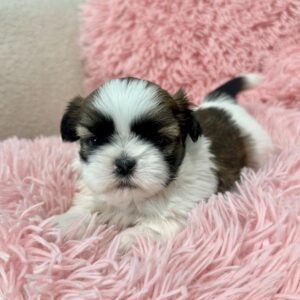
Prevention tends to work better than treatment after staining has already set in, and it doesn’t take much extra time once it’s part of your routine.
- Keep facial hair trimmed short and away from the eyes
- Wipe your Shih Tzu’s face daily, even before staining appears, as a simple preventive habit
- Feed a high-quality diet and consider filtered water if tap water in your area is high in minerals
- Keep the face dry after meals and drinking, since food and water residue on facial hair contributes to staining too
- Schedule regular grooming appointments, since a groomer familiar with the breed will keep the eye area trimmed and clean as part of routine maintenance
When to See a Vet
Most Shih Tzu tear stains are manageable at home, but a few signs mean it’s time for a professional opinion rather than continuing home care alone. See your vet if you notice redness or swelling around the eye, thick or colored discharge rather than clear tearing, squinting or apparent discomfort, a sudden change in how much your dog is tearing, or staining that doesn’t respond at all to consistent home care over several weeks. These symptoms can point to something like a blocked tear duct, an eye infection, or an irritation that needs treatment beyond routine cleaning.
Does Coat Color Affect How Noticeable Tear Stains Are?
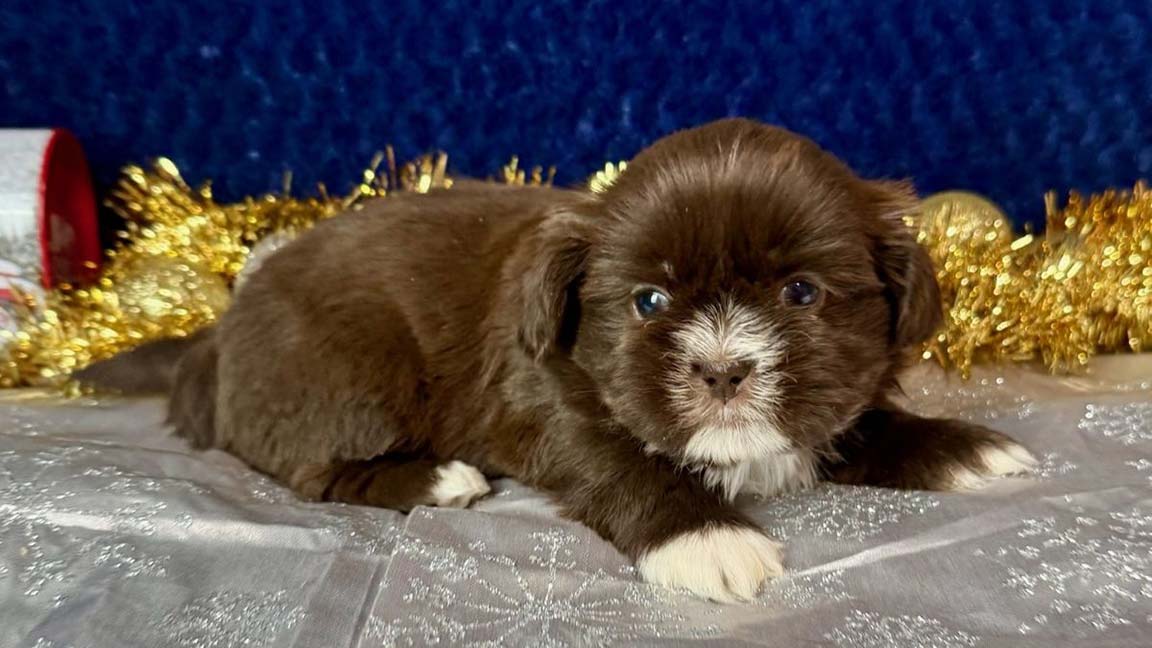
Yes, coat color plays a real role in how visible tear staining appears, even when the underlying tearing is exactly the same. Shih Tzus come in such a wide range of colors and patterns, and lighter coats, especially white or cream, show even mild staining clearly, while darker or richly colored coats can mask the same amount of staining almost entirely. This is one reason color sometimes comes up when families ask us about care expectations for a specific puppy. It doesn’t mean a lighter-coated puppy tears more, just that any staining will simply be easier to see.
How We Help New Families Manage This
Tear stains come up often enough in conversations with new puppy owners that we make a point of covering it early, usually as part of the same guidance we give on grooming and daily care. Since our puppies are raised in our home with daily handling from the very beginning, they’re generally already comfortable with gentle face cleaning by the time they go home, which makes this part of the routine much easier to establish early with your family.
Frequently Asked Questions
What causes Shih Tzu tear stains?
Shallow eye sockets, facial hair irritation, diet, water quality, teething, and occasionally underlying eye irritation all contribute to tear staining in Shih Tzus.
How do you remove Shih Tzu tear stains naturally?
Daily gentle cleaning with warm water, keeping the area dry, trimming hair away from the eyes, and reviewing diet and water quality are the most effective natural approaches.
Are Shih Tzu tear stains bad for their health?
Usually not. Most tear staining is purely cosmetic, though redness, swelling, or thick discharge alongside staining is worth having a vet check.
Can diet really affect Shih Tzu tear stains?
Yes, for many dogs. Lower-quality food or an individual food sensitivity can increase tear production, and switching to a higher-quality diet often helps.
How often should I clean my Shih Tzu’s tear stains?
Daily or every other day works best for most dogs, since consistency prevents staining from building up between cleanings.
Do Shih Tzu tear stains ever go away completely?
Existing stained fur usually needs to grow out, but consistent cleaning and prevention habits can keep new staining from developing.
Shih Tzu tear stains are one of those small, ongoing parts of owning this breed, and once you understand what’s actually causing them, they’re very manageable with a simple daily routine. If you have questions about caring for tear stains or anything else as your Shih Tzu settles in, we’re always happy to help. Visit our nursery to see our current puppies, or check out our complete Shih Tzu guide for more care tips like this one.
Champaign Shih Tzu
Travel Information
We provide transportation for our puppies and have had 100% success with puppies traveling all over the United States. Ground Transportation costs are usually around $400 to $600 above the cost of the puppy. Flight Nanny trips cost $900 to $1,400. You can contact us to make arrangements. We personally handle all travel details to guarantee that the puppy is provided with safety and the utmost respect.