
Shih Tzu Colors & Coat Patterns: A Complete Guide
Shih Tzu colors range from classic gold and white to solid black, liver, brindle, and rarer blue or silver tones, and many puppies carry two or more colors in a single coat that can shift dramatically as they mature.
At Champaign Shih Tzu, one of the first questions families ask about an upcoming litter is what Shih Tzu colors to expect. Shih Tzu colors are one of the most eye-catching parts of this breed, and after years of raising litters in our home, we have learned that no two puppies ever turn out exactly alike. The American Kennel Club’s Shih Tzu breed page notes that the breed has been a beloved companion for centuries, and part of that appeal has always been its striking variety of coats. Understanding the full range of Shih Tzu colors, and how much a coat can change between birth and adulthood, helps families know what to expect long before a puppy comes home. Our complete Shih Tzu breed guide covers the breed in more depth if you are just starting your research.
Common Shih Tzu Colors
Most Shih Tzu colors fall into a handful of recognizable categories, though the exact shade and pattern on each puppy is unique.

Gold and White
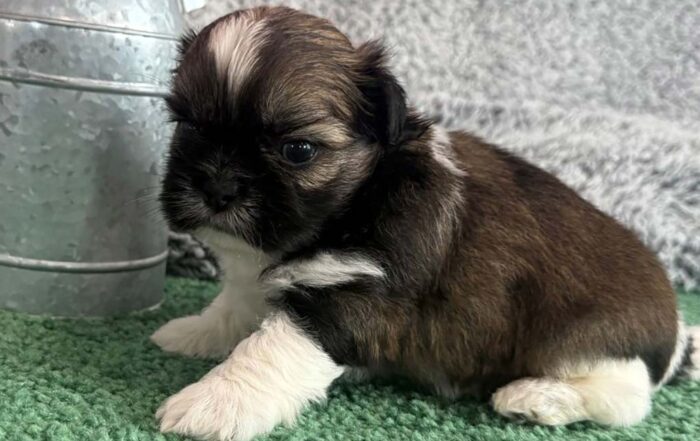
Gold and white is one of the most popular Shih Tzu colors, featuring a warm gold or tan coat paired with white markings across the chest, face, or paws. It is often the first image people picture when they think of the breed.
Black and White
Black and white is another classic pairing among Shih Tzu colors. The contrast tends to be sharp and even, frequently including a white blaze that runs down the center of the face.
Solid Black
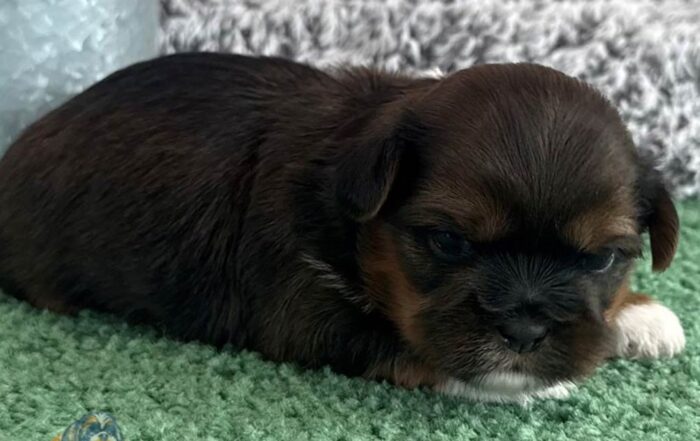
A solid black coat is a striking but less common option among Shih Tzu colors, and it can be difficult to predict within a litter until puppies are several weeks old and their adult pigment starts to set in.
Liver and Liver and White
Liver colored Shih Tzus carry a warm reddish-brown coat instead of true black pigment, along with a matching nose and eye rims. This is one of the rarer Shih Tzu color families ask us about by name.
Brindle
Brindle is a striped, tiger-like pattern layered over a base coat. It remains one of the more unusual Shih Tzu colors to appear in a litter, and each brindle puppy’s striping is genuinely one of a kind.
Rare and Sought-After Shih Tzu Colors
A handful of Shih Tzu colors are considered especially rare, and they tend to generate the most questions from families researching the breed before reaching out to a breeder. If you want to see what is currently available, our upcoming litters page is updated as new colors and litters are confirmed.
Blue and Silver
Blue is a diluted version of black pigment, and it is among the rarest Shih Tzu colors, giving the coat a soft, silvery gray cast rather than true black. Dilute-coated dogs across many breeds can occasionally develop color dilution alopecia, a manageable coat and skin condition that is worth mentioning to your veterinarian if you see thinning fur in a blue-coated dog.
Red
A deep, rich red is another uncommon shade within the spectrum of Shih Tzu colors, and it is sometimes mistaken for a very dark gold coat until you see the two side by side.
How Coat Color Changes as Puppies Grow
Shih Tzu colors are rarely permanent at birth. Dilution genes and other pigment modifiers can continue to influence how a coat looks well past puppyhood. Many puppies are born noticeably darker than their adult coat, and their coloring can keep shifting through the first one to two years of life. A puppy that looks nearly solid black at eight weeks may lighten into a soft silver, while a gold puppy may deepen or fade depending on its individual genetics. This is one of the most common surprises new families run into after bringing a Champaign Shih Tzu puppy home, so we always set expectations early rather than promise a color that might not hold.
Does Coat Color Affect Health or Temperament?

Coat color does not affect a Shih Tzu’s temperament, and in the vast majority of cases it does not affect health either. According to the American Kennel Club’s official Shih Tzu breed standard, all colors and markings are acceptable for the breed, so no single coat color is favored over another, and the American Shih Tzu Club, the breed’s official parent club, echoes that same standard when guiding breeders and judges. The one exception worth knowing is that dogs carrying a large amount of white pigment around the head can, in rare cases, have a slightly higher likelihood of certain congenital issues, which is exactly why genetic health testing matters for every litter regardless of coat color. The AVMA’s policy on inherited disorders in responsible breeding encourages exactly this kind of proactive health screening, which is why our own health guarantee applies the same standard no matter what color a puppy carries.
If you are still comparing breeders, our post on how to find an ethical Shih Tzu breeder walks through the health testing questions worth asking.
A Note From John and Wanita
After more than a decade of raising Shih Tzus at home alongside our own children, one thing we have come to appreciate is how little coat color actually predicts about a puppy’s personality. We have had gold puppies who were the calmest in the litter and black and white puppies who were the biggest troublemakers, and the reverse just as often. You can see this range for yourself on our parents page, where our breeding dogs cover nearly every shade discussed above. What we watch far more closely than color is how each puppy responds to handling, noise, and new experiences during those early weeks, because that tells us far more about the dog your family is bringing home than any coat pattern ever could. If you are new to the breed altogether, our post Meet the Shih Tzu: Small Dog, Big Heart is a good place to start.
Frequently Asked Questions
What is the rarest Shih Tzu color?
Blue and silver tend to be the rarest Shih Tzu colors, since the diluted pigment gene that produces them appears far less often than gold, black, or liver.
Do Shih Tzu puppies change color as they grow?
Yes, many Shih Tzu puppies lighten, darken, or shift shade significantly between birth and one to two years of age as their adult coat comes in.
Are certain Shih Tzu colors more expensive?
Rarer colors sometimes carry a higher price due to demand, though health, structure, and temperament matter far more to a responsible breeder’s pricing than coat color alone.
Can two solid colored parents produce a multicolor puppy?
Yes, coat genetics can carry hidden markings, so two solid colored Shih Tzus can still produce puppies with white patches or mixed patterns.
Does the AKC restrict which Shih Tzu colors are shown?
No, the AKC breed standard for the Shih Tzu accepts all colors and markings, so no single Shih Tzu color is favored over another in the show ring.
Champaign Shih Tzu
Travel Information
We provide transportation for our puppies and have had 100% success with puppies traveling all over the United States. Ground Transportation costs are usually around $400 to $600 above the cost of the puppy. Flight Nanny trips cost $900 to $1,400. You can contact us to make arrangements. We personally handle all travel details to guarantee that the puppy is provided with safety and the utmost respect.